Friday, May 24, 2019


Making a First Impression for the Second Time


As the pastor or leader of a congregation, our ministry is often motivated by the lens through which we view our context. Remember the first time you visited? You saw things with new and open eyes, not distracted by relationships and a sense of ownership, but also not informed by experience and history. On that day you stood in the shoes of a visitor and saw your church as that newcomer might. But time is a great teacher and as you became accustomed to your surroundings you started to fill in the blanks and gave substance to your context.

As time goes on, it is common to look at both our community and our congregation through a different lens. In the eyes of one who belongs, the assets become enhanced and the problems less significant. That junky vacant lot at the end of the block is simply Bob’s latest project. Those water stains on the ceiling are a reminder that we will have to fix that roof someday. The boxes in the corner of the church office are a sign that our filing system is a bit outdated and we need a place to put those old records. We learn to live with those imperfections as we serve Jesus in our own corner of the world. But we cannot forget that each little blemish says something to a visitor, particularly one looking for a new church home.

Every now and then it is helpful to take a look at our ministry setting through the eyes of a visitor, remembering what it is like to visit the community or the church for the very first time and to see what kind of first impression we are making. So put aside your sense of ownership, your feelings of pride, your unintentional defensiveness and go take a first-look at your ministry context once again.

Drive Through

Our first impression of a church or community is almost always from behind the wheel of a car. What do you see as you drive into the neighborhood? First impressions often say a lot about the economic status of the community, particularly in small towns or rural areas. You can usually tell if the area is in a state of decline or if there is an attitude of growth. Businesses and schools are both strong indicators of these attitudes. Either way, community pride, or lack of a sense of community, may be evident from the beginning. There is probably very little that we can do about homes that are not cared for or businesses that are closed. But there may be cosmetic things that a community or a congregation can do to enhance the look and feel of an area. If your congregation is looking for a relevant mission, this may be an interesting place to begin.

What would bring visitors to your door? Is the location of your church an asset or an obstacle? If you are located on Main Street or in the town square, high visibility may provide its own kind of advertising. But if you are off the beaten path, even by a block or two, check to see if there are signs showing the way to your building. Too often, we assume that those signs are in place and are helpful to a first timer. But the reality is that those signs that were placed in the ‘60s or ‘70s have frequently fallen into disrepair and are less visible that we assume. Make sure that visitors don’t have to guess where to find you.

Walk Around

When was the last time you took a walking tour of the neighborhood surrounding your church? It has become very easy for us to hop in the car whenever we need to go anywhere, even if it is just a block or two. But being in the car often isolates us from the world around us, even if it is the neighborhood in which we live. Walking can provide a different type of lens. Meaningful relationships develop when we get to know the people around us. Stroll through the business district and you are likely to engage in conversations that you never expected. Walk around the blocks surrounding the church and you will frequently encounter neighbors working in their yards, walking their dogs, or playing with their families. And if your rural neighborhood is like mine, those chance encounters may actually turn into opportunities for ministry.

Walking forces us to slow down and observe the world around us. What do you see in your neighborhood? It is likely that you will run into a member or two.  And you will probably encounter someone that you know goes to another church in town. But you may also come across a different group of people – those who are not committed to a church family at all. And if that is true, then the question we need to ask is this – why not? Our church building is located right here, our activities revolve around this block, our people can be seen coming and going both on Sunday morning and at other times of the week. So why has our ministry not touched all the neighbors around us? What is it that we are doing, or not doing, that has neglected to include or reach out to the people who live within a few minutes of our building? Even in small communities there are those who are ambivalent about faith or who have not felt that the church was relevant in their lives. How can we show them that our church has something very special to offer and that they are welcome, even after all these years? That simple walk may change your mission.

Come On In

What do visitors see when they pull up to your building? Is there adequate parking? Are the entrances clearly marked? Does the condition of the building say something about the commitment found inside?

Most visitors don’t want going into a new church to be a lot of work. The front door should be obvious. The greeters should be friendly. The sanctuary should be easy to find. Accessible options should be available for those with special needs. The worship should be easy to follow. While all of these things sound obvious, the truth is that the absence of any of them may cause a first-time visitor to walk away and never come back.

We are used to our quirks and idiosyncrasies. We know where the bathrooms are hidden and where the bulletins are kept and when to stand up and sit down. But visitors don’t. Walk through your building as if you were encountering it for the very first time. Make note of any characteristics that would be unknown to a first-time visitor. Attend worship on a Sunday when you are not preaching and see for yourself how visitors are greeted, how much insider language is used in the service, and how you feel after spending an hour as regular person in the pew.

Log On

Most church visits today start long before the prelude. In fact, your online presence may be as important a factor in attracting new attendees as anything you will find in your building. Online searches are common and help a church shopper to weed through the options and make an informed decision. So logging on to your church website or Facebook page is just as critical as a personal tour and may be just as essential in making a first impression.

Most internet searches are short and to the point. If the searcher finds what they are looking for, they may look around for more information. If not, they will usually move on and look elsewhere. What does your web site say about your church? It needs to be easy to find, simple to navigate, and the content must be up to date. First time visitors want to know where you are located, what time you worship, and what they will encounter there. Photos, especially action shots, demonstrate the life found within a congregation and can be an essential tool in attracting visitors to your door.

Take a tour of your church web site. Don’t look at it as the pastor, but as a person who knows very little about this congregation. Is there a sense of life? Can you find essential information? Are families featured prominently? Does this look like a place where you would feel welcome? Visitors are seldom interested in denominational issues and have little patience for long treatises on the intricacies of your theological viewpoints. But they do want to get to know the pastors, get a feel for the style of worship, get some information about the educational programs of the church, and explore what the church believes in small, easy to read statements. Think of your web site as an appetizer that encourages the visitor to come and find out more.

Do you see vitality when you look at your church? Change your perspective every now and then and look through the eyes of a newcomer. You may be surprised by the possibilities you find.

Friday, December 14, 2018


Finding New Definitions for Success


Learning to Look Beyond the Numbers


What does success mean in your small or rural church? Too often we adopt models that are better suited for the corporate world, rather than the body of Christ, and in the process we find that both our vision and our mission can frequently suffer. Part of the problem is that we consistently ask the wrong questions.

From our 21st century, North American point of view, we measure success with numbers.  How many members do you have? How many have you gained this year?  How many have you lost? Then we tend to compare those numbers with the standards set by other congregations.  Our measure of a successful church is one that is increasing in membership and consistently has more income than expenses.  Congregations that experience consistent declines in these categories are a source of concern, regardless of the type or quality of ministry that they practice.  We feel comfortable with this corporate model of assessment, because it is the same model that we use to assess the other aspects of our lives.

Many small and rural churches suffer from an identity crisis based on their perceived place in the comparative pecking order.  As pastors we feed that mindset in the ways we refer to our own ministry settings.  In talking to others about the work that we do, one of the first questions we frequently ask is, “How many members do you have?” as if that is the most important of all identifying factors.  Too often members of these smaller churches undervalue the work and ministry they do, simply because they are trapped in a system that puts more of a premium on the number of people in the seats and less of a value on the quality of their faith or the things they do in the name of the Gospel.  But what if we ignored the numbers and focused primarily on mission? What if we looked at the work that we do in our context through the lens of service to Jesus Christ, rather than quantifiable categories?

Smaller membership congregations have the opportunity to renew their own sense of spiritual well-being by intentionally thinking about the purpose of their faith community.  It goes without saying that worshiping and glorifying the Lord is our primary purpose, but what happens if attendance numbers are low or musical gifts are absent or the quality of worship is uninspiring for reasons that are unrelated to the gospel itself?  These factors can accelerate the sense that a church is in decline.  Worship is essential, but if worship is the only way the congregation expresses its life together or its presence in a community, then a decline in worship may be an indicator that the life of that congregation is coming to an end.

Vital churches, regardless of size, discover additional ways to express their mission to Jesus Christ.  While worship is generally an internal expression of a congregation’s calling, other means of outreach can feed the flames of their faith and assert the importance of the church in that community.  Let's be very clear - making disciples and providing pastoral care are essential functions of every faith community, regardless of size. And mere activity should never be mistaken for the real business of the church. But activity is the language that the church speaks in its effort to be visible to the larger community. Through visible activities the church is able to make inroads into larger circles, often filled with those who have a marginal, or even no faith commitment. This is an opportunity for mission and evangelism local-style, even if we never use those words.  A low-membership church, even one that has been in danger of closing, can experience a renewed sense of life and purpose, when its members rededicate themselves to a particular work that distinguishes them within that context.

Mission studies are common within most denominations, but unfortunately they most frequently occur when the church is in the process of seeking new pastoral leadership.  Too often that means that the study is seen as another hurdle that needs to be overcome so that we can get on with the process of finding the right person.  As a result, they often reaffirm the most common practices of a congregation and seldom lead to new ways of thinking or new directions for ministry. Therefore it is important for congregations seeking new vitality to think intentionally about their identity at a different time, when finding a pastor is not the primary concern.

Every small and rural church should ask this question  - If we did not exist in this community, what would be missed?

If the answer is nothing, then the writing is on the wall. That church is a good candidate for closing, since it contributes little to the cause of Christ or the community itself.  But if the answer reveals an aspect of ministry or service, then the conversation has a place to begin.  Vitality in any church, particularly a small congregation, is directly related to identity.  And identity is related to the ways our efforts to represent Jesus are perceived and received by ourselves and by those in the world around us.

Many churches still live in the shadow of their golden years. They look back on a time when the pews were full and the Sunday School rooms crowded and think that the same type of ministry is possible today. But with very different resources, the 30 member church cannot live the same life as the 200 or 300 member church that they used to be.  The question is not "How can we do what we used to do," but rather, "What can 30 people do well in this place to bring glory to God?"

What does this look like in real life?  A sense of service in the name of Christ is unique to every faith community.  In one place I served it was our commitment to meals on wheels and the impact that had on the shut-ins around us.  In another, it was realized by renewing our commitment to the young people of the community, regardless of faith or denomination, and providing a place for them to gather a couple of nights a week. In other towns it might mean providing weekly volunteers at the local nursing home or sponsoring a food stand at the county fair with prices that enable even the poorest of families to enjoy a meal.  Some congregations have an annual meal or event that everyone looks forward to, like a chicken supper or a roast beef dinner.  On the outside they may seem like simple fundraisers, but in reality the ways that church members are drawn together to make the event a success and the perception in the community that this Christian church is doing something for others in the name of Jesus, makes the event a success in ways that reach far beyond the number of people served or the amount of money raised.

Even churches that have no distinguishing activities or types of outreach can gain a sense of vitality by asking a couple of different questions – what does our community need, how can our church fulfill that need, and how could such an outreach serve the cause of Christ?

Being a small church is not the same thing as being a dying church.  Because numbers only tell a part of the story.  The real key to finding vitality in small packages is in identifying our unique calling, putting it into action, and in realizing how that serves Jesus in this very special place.


Friday, September 21, 2018

New Opportunities from Unexpected Sources


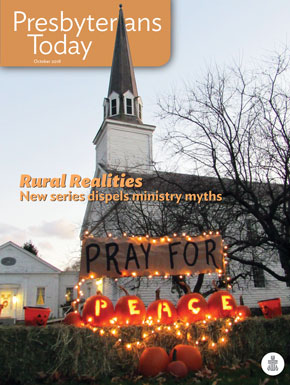
Rural churches look different than they once did as our communities become home to a new wave of immigrants seeking a better life for their families.  It isn't happening everywhere, but it is a reality across the country. We have the option to ignore these new neighbors and continue to do business as we always have or we can recognize that the source of vitality that we have been seeking has actually moved into the neighborhood.

Read about "The Changing Face of Rural Ministry" in the October issue of Presbyterians Today Magazine.


Thursday, July 19, 2018

Have You Become a Rural Pastor?


You know you are a rural pastor if…

You didn’t realize that most people actually buy sweet corn.

Your organist has had to leave the service because the cows were out.

You expect attendance to drop during planting, harvest, and deer season.

You learned that “a little lunch” is actually another meal served at 10:30 a.m. or 3:00 p.m.

You have prayed for it to rain – and for it to stop.

You realize that if someone offers you a doughnut, they are not asking if you are hungry.

You know that coffee is just a good excuse to visit.

Your car and your cell phone have taken the place of your office.

You have made a pastoral call with rubber boots on.

You have actually done counseling while riding in a combine.

You regularly drive 100 miles to the hospital, sometimes several times a week.

You have seen neighbors complete someone’s harvest in one day because they had a crisis.

Your church secretary knocks on your door at 6:30 a.m. because she let you sleep in.

You know the names of the dogs on every farm in your area.

You have had breakfast at the sale barn.

You know how to read a plat book.

You know that comments about green and red tractors are about loyalty, not just colors.

You can tell which of your members raise cattle and which raise pigs when they come in the room.

Local doctors are not afraid to call you when a patient needs your prayers.

It has taken you three hours to get the mail from the post office (because so many people wanted to visit).

You tell distance by minutes, not miles.

Pies, cakes and other baked goods regularly show up in your office.

You have received a grocery sack full of beef or pork for Christmas.

Memorial Day is a big deal at the local cemetery and you are expected to pray.

You get a Christmas gift every year from the local funeral home.

You know that scalloped potatoes and ham is its own food group.

You have done Christmas caroling while being pulled on a hay rack.

Your board meeting can’t start until 8:00 p.m. because several elders have to finish milking.

You have to lock your car doors in the summer or you will mysteriously get a sack of zucchini.

Your nativity scene has real sheep.

You have driven 20 miles for an ice cream cone.

You have eaten at least one meal that featured an animal with a name.

You regularly see four or five generations of a family in the same pew.

You know that a veggie burger is a hamburger with lettuce, tomatoes, and onions.

You are not surprised when your doorbell rings at 2:00 a.m. because someone needs to talk.


-         Skip Shaffer, 2018


Friday, June 15, 2018


More Than a Cup of Coffee


Nearly every small town has one.  Some have more than that. Look in any rural area and you are likely to find a gathering place, a location where men and women get together ostensibly for coffee, but actually for community. It might be a local cafĂ©, or a convenience store, or even a small business, but in each case you will find more than simple greetings or conversations about the weather.  If you listen closely enough you will hear the perspectives and ruminations and worries and dreams of people who understand that a community is far more than a collection of buildings in a common place.

Like many who call the church home I love coffee. And I know that I’m not alone.  In fact, I have heard some suggest that coffee may actually be our hidden sacrament.  I don’t know about that, but we certainly consume enough of it. And for many of us, morning would not be the same without it. But the real value of coffee is not found in the cup itself, but in the opportunities that it presents. You see, coffee is not our reason for being together, but an excuse to do so. How often do we suggest to others that we “get together for coffee?” If drinking the beverage itself was the most important thing, we could easily do that in the comfort of our own homes. But coffee gives us an excuse to gather with others, often in regular settings, and to share the news of the day. In the midst of those gatherings we are reminded that we are not alone in the difficulties and rigors of life. We talk about many things, sometimes important, often trivial. But the value is in the development of a kind of community that we come to depend on.

The church building is a place for community, but in a rural area it is not the only place. And if we are faithful to our task, we quickly realize that the presence of the church, or at least the faith that we share, can show up in a variety of different settings. Where do people gather in your community? Those places often have unique and interesting names – The Breadbox CafĂ©, The Feedbunk, Sparky’s, The Chrome. Sometimes they have a more commercial feel, like HyVee or Caseys or Cenex. More often than not that sense of community happens organically, over time, and not because we decide to create it. One thing is certain – whether you are aware of it or not, many of the people in your congregation are gathering somewhere during the week, and often with others from outside the church.  Discovering where can be an incredible asset in our efforts to serve God in a particular place.

Most often these informal gatherings happen in public places and usually at predictable times. Are you welcome there, have you been invited by someone to join the conversation, or have you simply stumbled upon a group of people by accident? All of those things have happened to me and more. Most pastors feel a bit awkward about simply showing up and inserting themselves into the midst of the conversation. But the smart pastor knows that there are tools available and is not afraid to make good use of them. Is coffee available? Buy some. Are doughnuts on the menu? How about offering to share some with your “friends”? Experienced pastors know that hospitality is the language of rural life and food is the way it is most often expressed. Drinking coffee or eating doughnuts is never an end in itself, but a socially acceptable way of entering the conversation. Many things have been shared over a piece of pie or a cup of coffee that would never come up in a brief casual conversation on the street. Even pastors find themselves welcomed when they appear as just another neighbor looking for their morning coffee and a newspaper.

Remember, it is our job to listen and be present. To hear what our friends and neighbors are saying and what they feel the needs are in our particular community. It is not to try to lead the conversation or to convert the others or to be the resident expert. We represent Christ through our presence, but this is not the place to teach or preach, but to listen and learn.

Why is this important? Three basic reasons come to mind. First, if we are going to be an active part of the community, we need to know what is on the minds of our members and neighbors around us. Successful pastors of vital rural churches know that their work is not confined to the sanctuary, but requires that we take a role in helping to revitalize and even transform the community that we call home. Those ideas do not come from our own minds, but from understanding the concerns being expressed by those around us.

Second, relevant preaching requires that we also exegete the context in which we serve. That means developing an understanding of the community, the people who call it home, and the problems that they face. Karl Barth was famous for saying that good preaching happened with the Bible in one hand and the newspaper in the other.  I would take that a step further and add a third element – with an ear to conversation within a community.

Finally, the rural church is only effective if it exists outside the church building. Every pastor should ask this question – are we providing the tools that our members need in order to be an effective person of faith throughout the week? Helping them to understand that faith is not a Sunday thing, but a guiding principle of our lives prepares our members to approach every situation, every conversation as a disciple of Jesus.  It is not about preaching or evangelizing in the coffee shop, but about bringing a Jesus attitude with them wherever they go. If we are able to do that, then the church will be present in amazing and unexpected places.


Tuesday, May 8, 2018


The Courage to Be Contagious


There is one question that every church leader needs to ask – if you were not serving as the pastor of your congregation, would you still attend that church? If the answer is yes, what is it that you find so appealing? If the answer is no, then what needs to change, and more importantly why do you continue to perpetuate something that just doesn’t work?

It doesn’t matter where you are, there are things happening in vital churches that seem to draw people in. Interesting ministry invites people to come and see what the excitement is all about. In many ways, vitality is contagious. People talk about what interests them and what is important in their lives, and that is just as true about the churches we attend as anything else. 

How about in your community? Are your members talking about the church in ways that will encourage and invite others to come and see what is happening there? Simple things matter, from worship services that move our spirits, to Vacation Bible School programs that are open to every child in the community, to youth groups that seem to be on fire, to fellowship and mission activities that show the love of Christ.

Those are the kind of things that represent what it means to be the Body of Christ. And being the Body of Christ is essential to becoming a vital congregation. When you ignite an excitement in your members, you can be sure that they will share that message with their friends and neighbors, in both intentional and unintentional ways.

So is your church contagious? What is happening in your midst that will encourage others to want to come and see for themselves? It is our task to share the love and message of Christ with the world around us. But there is nothing wrong with doing that in a way that is appealing and inviting. If we are satisfied with simply providing three hymns and a sermon every week, if that is our standard, then one can reasonably ask why a visitor would bother to get out of bed and spend an hour with us on Sunday morning.

How can we begin to make our congregation contagious? While the answer to that question is wide and varied, there are a few things that good leaders can do to encourage the spread of enthusiasm and excitement in your community:

See opportunities, not limitations. Small and rural congregations are well aware of the dynamics that work against us. We know that demographics are not usually in our favor and that a decline in population usually means fewer members, lower attendance, and limited financial resources. The key is to stop worrying about what we don’t have and focus on what resources and opportunities are available to us now. We are not asked to do ministry with the gifts we had twenty years ago, but with the gifts we have here today.

Let mission take the lead. Worship is often synonymous with church, and is the most visible aspect of our ministry. But mission is our connection with the world around us. Non-members may never see the inside of our sanctuary, but they are often exposed to the work of the church in the community. Finding ways to express the love of Christ outside the church building sends a powerful message, both about the Lord and about your congregation. What needs are present in our community and how can we dedicate our membership and our resources toward strategies that will enable us to respond to those needs?

Be authentic. It is interesting to note that most rural pastors don’t come from rural backgrounds. But that does not mean that you cannot be effective. Leadership in a vital congregation means understanding what you know and admitting what you don’t know. No matter what your background, be yourself. People can smell a phony a mile away and once you lose credibility it is hard to regain it. Don’t be afraid to let others know that you want to understand who they are and what they do. And that you want to be a part of their community – and their lives. There is a reason God brought you to this church and this community – be inspired to use your gifts to  respond to that call in vibrant and enthusiastic ways.

Speak Jesus fluently. As leaders we come into a community not just as a helper, but as an ambassador for Jesus. It is our calling to talk about Jesus wherever we go and whatever we do.  In some new leaders there is a tendency to tone down the faith aspect of our work until we gain the people’s confidence. But that is so unnecessary because everyone knows why we are there.  And it is confusing to others if we don’t intentionally express and live the faith that we represent. If we don’t, who will? The unintended benefit is that our willingness to speak about Jesus frequently and fluently gives permission to others to be more open about their own faith. In the process, the church develops a reputation for being excited and unashamed about what we believe, opening the door for others to join the conversation.

Model leadership. Pastors are expected to model what it means to be a person of character and to be the de facto leader of the congregation. But if we limit that expectation to our called clergy then we miss a great opportunity.  We cannot do it all alone and we should not try. When we allow the elders, deacons, teachers, and others in the church to share in leadership and service we demonstrate that faith and service are valued in everyone and not just those who are paid to do so. Modeling leadership does not just mean sharing the work, but also extends to the sharing of ideas and initiative as well.

Do you have the courage to be contagious? Like it or not, as pastors we set the tone in everything we do.  We establish the standard for the attitude of any gathering by the attitude we present.  We play a large role in developing a sense of excitement and enthusiasm and wonder about the faith and community experienced in our congregation. Vital churches have pastors who are inspired about their faith and are not afraid to share those feelings in all that they do. Most of all, they are not afraid to encourage their members to do the same!


Wednesday, March 14, 2018


Looking for the Signs of Life


One of our primary responsibilities as pastors and church leaders is to find ways to inspire and ignite life within our congregations. For some this is simply a matter of finding ways to engage a body of believers who are ready to be led. In other cases, it may feel like a slow and arduous process as you try to re-energize a congregation that has grown tired and stagnant.

Unless your ministry is a new church development, your congregation will come with a history and a tradition. Sometimes those can be used as a catalyst for engaging in new and exciting ways of being the church in the world.  And sometimes they serve as an anchor around our necks that hold us back and become a barrier to any kind of meaningful change. Learning to discern what can be used and what needs to be discarded is an important skill for any leader interested in true revitalization.

Transformation is something that we all want for our congregations, but our results are often mixed. There is no secret formula to achieve it and there is no single strategy that will ensure success.  And very often achieving that sense of vibrancy and vitality depends on different factors in each congregational context.

What gives a church that special aura of vitality? How do we recognize the signs of life? While there is no one-size-fits-all solution, there are a number of factors that seem to be common to the churches that we would consider the most appealing.

Vitality requires a purpose – Churches that have an extra sense of life are motivated by more than just the desire to be together.  Sometimes it happens though worship, but often we find ourselves living out that purpose through a variety of activities, some social, some educational, some missional. Churches that exude a sense of excitement understand that there is a reason for everything we do together, and that ultimately reaching out to others in Jesus’ name is an important thing.  It is what motivates and encourages us and it is inviting to others who want to join our cause. 

Vitality focuses on mission – Our Christian walk compels us to reach out beyond ourselves. Mission can be realized in many different programs and approaches, but a sense that we are serving Jesus in the world, in ways that make a difference, is key to a sense of fulfillment within the congregation. Churches that are self-focused, where the primary attention is on the care of the building or making the budget or having meetings for their own sake do not share that sense of purpose.

Vitality is welcoming – Being a welcoming congregation is more than just greeting visitors at the door.  It also requires a sense that those in a congregation value and enjoy being together. Vital churches find the time to be in fellowship together, not out of obligation, but because they value the gifts and friendship of the body. That is why so often we find ourselves sharing together around the table, whether for a meal, a cup of coffee, or even to experience the love of God through the Lord’s Supper. The signs of life are realized as often over a piece of pie as they are in a service of worship.

Vitality depends on sharing – Churches are the strongest when their members join together to share the work and the responsibility of being the church. Life is most often found in those places where the people are engaged in ministry and don’t just assume that it is the job of the staff or pastors. I have yet to see a congregation, large or small, where there was not enough work to go around, but the big question is in how the work is distributed. Cultivating spiritual and administrative gifts and then allowing the freedom for our members to exercise those gifts, is one of the primary things we can do to encourage life in our churches. With that sense of confidence and responsibility comes an attitude of shared ownership in the mission and a motivation to serve God through the church.

Vitality values authenticity – Be yourself – it is the first rule of success in our life together. Vital churches do not need experts – they need servants who understand two things: 1) that we are all in need of God’s grace, and 2) that we can learn from each other. Successful ministry never results from telling others what to do, but rather by sharing together in this journey of faith. When pastors take the time to get to know the members of their congregation, and show that they are truly interested in understanding their lives and their gifts, then we set the stage for a ministry of mutual trust and service.

Vitality reflects our worship – Our worship begins in the sanctuary, but it doesn’t stay there. The way we express our lives together in Christ is one of the most important signs of life in any congregation. Our spiritual lives are encouraged and fed by the time we spend together in that place, but they are nurtured and nourished when we take what we receive there and apply it to what we do each and every day.  Worship takes many forms….in our prayers….in our devotions…in our scripture reading…in our service out in the community…and in the way we demonstrate that we are people of God. Vitality happens when worship becomes an irresistible expression of our faith and not just an activity that happens every Sunday at 10:00.

What are the signs of life in your church? It comes from different places and in different forms.  It also comes from both the pastors and leaders of the church as well as the everyday members who make up the family of faith. As you get to know them in their own contexts, take note of what seems to give them energy or the areas in which they demonstrate a passion for their faith. In this new era in the life of the Church, it is important that each of us has our eyes on ways that we can effectively cultivate vitality in our work together.  It doesn’t matter whether your church is large or small. We cannot afford to be complacent, inflexible, or worse yet, boring. But we must also be faithful to the leading of the Spirit and to the Word of God.  We are given a mandate to share the good news from the God who loves us. Let us find ways to accomplish that responsibility by encouraging those around us, while also reaching out to a world that is still waiting.